The Illusion of a Broken System
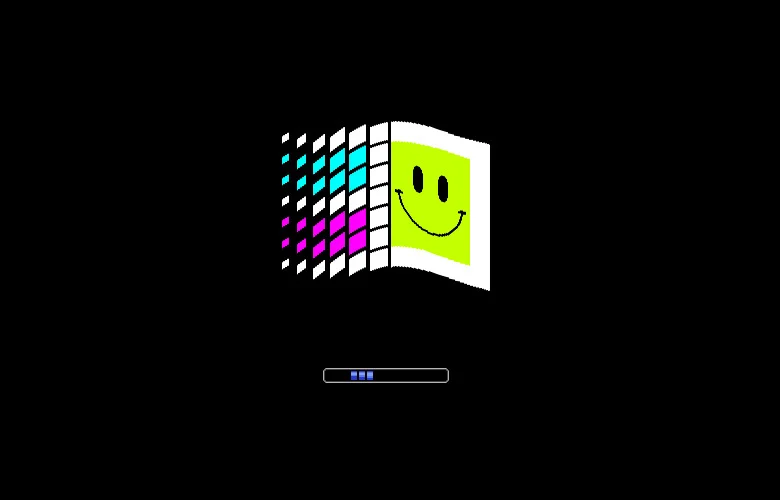
Nothing triggers a more visceral, panic-induced response in a computer user quite like the Blue Screen of Death (BSOD). It is the ultimate digital wall—a signal that the layer of abstraction we call an "Interface" has collapsed, revealing the fragile, binary chaos beneath. The site FakeUpdate exploits this collective trauma through high-fidelity, pixel-perfect recreations of system crashes ranging from Windows 93 to the latest macOS updates.
The Psychology of the Error
The BSOD is more than just an error message; it is a design language of absolute failure. By mimicking the specific "System Blue" ($#0000AA$) and the fixed-width BIOS fonts (like Fixedsys or Lucida Console), FakeUpdate triggers a masterclass in digital tension. It relies on the "Opaque Box" theory of computing: most users do not understand why their computer works, so they are primed to believe it has stopped working at any moment.
Architecture of the Prank
Technically, the site is a brilliant example of Browser Environment Hijacking. It utilizes modern web APIs to simulate an environment that should, by all rights, be impossible to achieve within a sandboxed web page. It turns the browser into a deceptive theater stage.
- Full-Screen Implementation: The site leverages the
Element.requestFullscreen()API. By stripping away the address bar, tabs, and OS taskbar, it removes the user's "safety net," making the browser window indistinguishable from the hardware's output buffer. - VGA Aesthetic Emulation: To replicate the 640x480 resolution of legacy crashes, the site uses CSS
image-rendering: pixelated;and viewport-unit scaling. This ensures that the text looks jagged and "low-level" even on 4K displays. - The "Update" Loop: Beyond the crash screens, the site simulates endless update percentages (e.g., "Working on updates 99%..."). It uses a simple randomized
setTimeoutloop to ensure the progress bar never actually finishes, exploiting the user's socialized patience. - Event Interception: The site captures keyboard events (like
F11orEsc) to prevent the user from easily exiting the illusion, heightening the momentary sense of loss of control.
Digital Theater & The Uncanny Valley
In the PagesChaos archive, FakeUpdate represents the category of Interface Mimicry. It illustrates how easily our perception of "broken technology" can be simulated using only basic HTML, CSS, and JavaScript. It moves the BSOD into the realm of performance art, where the "audience" is a panicked user and the "set" is a $1,500 machine reduced to a static blue rectangle.
Archival Note: Nostalgia for Failure
Interestingly, as operating systems have become more stable, the BSOD has shifted from a common frustration to a nostalgic artifact. We archive this site as a testament to the days of "Plug and Pray," where the blue screen was a frequent visitor in the domestic computing experience. It reminds us that in the 2026 era of seamless cloud computing, there is still a perverse thrill in watching a system "die."